
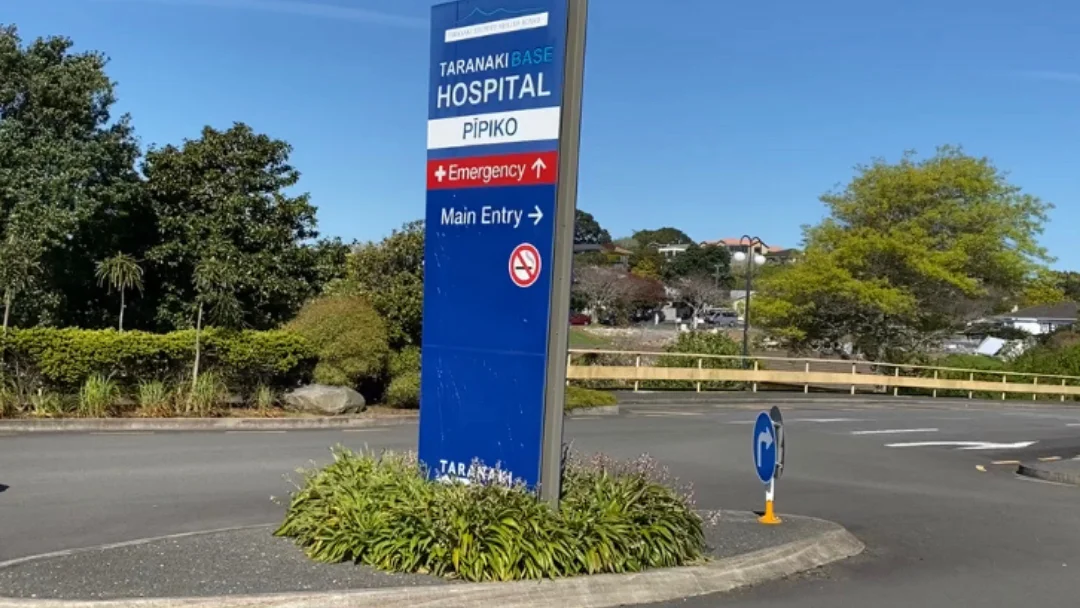
In this episode of the NZ Ahead podcast, Liz sits down with Prudence Thomson from Accent Health Recruitment to explore healthcare jobs in New Zealand for overseas citizens.
Prudence, a nurse turned medical recruiter with 28 years of experience, explains why New Zealand relies on overseas medical staff, which roles are most in demand, and how international doctors and nurses can make the move.
She also shares insights on the healthcare system, salaries, and what life is really like for medical professionals in Aotearoa.
Read the full, raw transcript below to follow their journey! You can also watch the video version of this podcast below or over on our NZ Ahead YouTube Channel
This post may contain affiliate links. They cost you nothing, but we make a small commission. Please see our Disclaimer page for more details.
Do You LOVE New Zealand? Sign up below, and I will send you my FREE Moving to and Living in New Zealand Guide.
A 5 Part Video Series!

Quick Facts About Healthcare Jobs in New Zealand for UK + US Citizens
| Question | Answer |
|---|---|
| Who is this episode for? | International doctors, nurses, and allied health professionals |
| What percentage of NZ doctors are trained overseas? | 70% |
| Which roles are most in demand? | GPs, psychiatrists, surgeons, ophthalmologists, dermatologists, urologists |
| Which nursing roles are being recruited? | Theatre nurses, mental health nurses |
| Is recruitment free for candidates? | Yes, the employer pays |
| How long does the process take? | 6 weeks to 6 months |
| Average salary for a GP? | Competitive, with excellent work-life balance |
Why Healthcare Jobs in New Zealand Are in High Demand
Healthcare Jobs in New Zealand: A Complete Guide for US Medical Professionals
Host: Liz
Guest: Prudence Thomson, Accent Health Recruitment
We speak to hundreds of people who are making the move to New Zealand every single day. And when we ask them, “What part of New Zealand are you going to be living in?” They say, “Probably anywhere but Auckland.”
In this episode, Liz sits down with Prudence Thomson from Accent Health Recruitment to explore healthcare jobs in New Zealand.
Liz: Prudence, welcome back to the NZ Ahead podcast. We are thrilled to have you back for the second time.
Prudence: How exciting. We were just saying we can’t believe how the time has flown by. Was it yesterday or was it 2021? It’s crazy.
Liz: For people who didn’t catch your first episode, can you just give us a quick update about who you are and why we’re chatting?
Prudence: I’m a nurse originally. I haven’t nursed now for 30 years, but I’ve spent the last 28 years recruiting medical staff all from overseas into New Zealand. We’re based in New Zealand, we offer a free service recruiting medical staff from overseas, a lot from the US, the UK, Europe, Singapore, Netherlands, Israel, all around the world.
For those considering a move, our how-to-relocate-to-new-zealand guide covers the first steps.
Why Does New Zealand Recruit Healthcare Workers from Overseas?
Liz: Why do we look overseas to recruit healthcare staff? Why are we not just hiring doctors and nurses here in New Zealand?
Prudence: We would love to use homegrown New Zealand Kiwi nurses, doctors, and allied health, but we simply haven’t got enough of them. 70% of our doctors were trained overseas. Traditionally it’s been between 60 and 70% over the last 20 years. So we’ve always relied on an overseas workforce.
We find that the New Zealand health system is very similar to Singapore, US, UK, and the doctors fit in very, very easily. We’ve got a growing and aging population and there’s demand around the world for medical professionals.
So if they come to New Zealand, if they choose New Zealand, we consider ourselves very, very lucky.
Liz: So of all the countries in all the world, why do they choose to come to New Zealand?
Prudence: It is a really great reason. I find that this is the feedback I get from doctors after 25 years of recruiting—it’s he tangata, he tangata, he tangata, which is Māori for the people, the people, the people.
They come for the scenery. They stay for the people.
We have so many people who come for one year and end up staying 10 or 20.
They love the lifestyle in New Zealand, the salaries are very good, the cost of living is okay, the medicine and the range of treatments they can provide is fantastic, the hours of work, and the patient satisfaction, having less patients per day, is actually a really big driving factor.
This is a key reason why people ask is-new-zealand-a-nice-place-to-live —the work-life balance for healthcare professionals is exceptional.
Is it easy to relocate to New Zealand?
Liz: Is it easy to come over? What hurdles are they going to be facing when they apply?
Prudence: The New Zealand Medical Council takes 20 working days, and that process, if you’re American, can just take a bit of paperwork—getting documents from your university, getting documents from your employers. That piece is actually quite okay. It’s all online.
Residency, and we use New Zealand Shores, who I think are fabulous, straight-to-residency can take 10 working days to get your residency. That’s usually doctors—they get prioritised to get residency first.
Some countries, like Singapore and the Netherlands, have to do an English language test. That’s not particularly easy, but everyone passes eventually, even if they have one or two or three goes.
Liz: Because they’re doctors, do they have to have a health check?
Prudence: Yes, they do. They are pretty good, but they’ll say, “Well, my BMI might be a little bit high or my blood glucose is a little bit high.” But the doctors all have to have medicals if they’re coming for residency. And they say, “Use my mate,” and I’m like, “Actually you can’t. You have to go to a panel physician.”
For more on the health assessment, our health-requirements-for-a-nz-visa guide covers the process in detail.
Do You LOVE New Zealand? Sign up below, and I will send you my FREE Moving to and Living in New Zealand Guide.
A 5 Part Video Series!
What Healthcare Jobs Are Available in New Zealand Right Now?
Liz: Who are they recruiting, and why aren’t you recruiting nurses anymore?
Prudence: We’re recruiting less nurses. We used to recruit about ten a week and now it’s two or three a month. Being a nurse myself, I love working with nurses, but we’re recruiting theatre and mental health nurses—operating theatre and mental health, adolescent, drug and alcohol, psych, any nurse within the mental health field.
There’s small positions available for intensive care, but about three years ago they did a huge recruitment drive and they filled up all the spaces to excess. Plus, budgeting from the government meant that they couldn’t open up more spaces.
We do have to give jobs to the Kiwis first. The New Zealand nurses get first dibs at the jobs, which is absolutely fair enough. Then we look at overseas nurses, but the skills the overseas nurses have are far superior to a lot of the local New Zealand nurses that have just graduated.
Liz: What about doctors?
Prudence: We’re recruiting a lot of GPs, so family physicians, psychiatrists, orthopaedic surgeons, urologists, dermatologists, ophthalmologists. We’re looking for an ophthalmologist at the moment, and a dermatologist and a urologist. Pretty much everyone across the board—general physicians are very, very popular. There are vacancies in the private and the public sector with them at the moment.
Liz: What’s an ophthalmologist?
Prudence: An ophthalmologist is an eye surgeon who does cataract, retina, front and back eye. My last job was working as an eye nurse, so I’ve got a few clues. We need them in New Zealand because of diabetes in New Zealand and the impact of diabetes on eyesight.
For those interested in the new-zealand-skilled-migration-visa , medical professionals are typically on the Green List.
What Types of Nurses Are Being Recruited?
Liz: If I’m a nurse and I’m not trained in the mental health sector, could I come to New Zealand and retrain?
Prudence: Absolutely. If you’re a general comprehensive nurse, just to move into mental health, even if it was community, elderly care or an award setting, absolutely get that experience.
You would need 12 months, but that’s generally how long it takes someone to make the move over.
So getting that experience first, doing some courses, weekend or night courses or in-service education, certainly helps as well.
What Is the Healthcare System Like in New Zealand?
Liz: What is your opinion on the healthcare system in New Zealand? Let’s start with private.
Prudence: I love the private health sector. I’ve got private health insurance with Southern Cross. It does cost me $3,000 a year, which is a lot. But in February, I had some family-related illnesses, so I went for check after check—colonoscopy, mammography, uterine scan, heart scan, everything.
I had so many medical appointments and they were exceptional, absolutely excellent.
Liz: And the public system?
Prudence: Our emergency departments and acute care is backed up over winter with the RSV and the respiratory virus and cardiac and asthma and sporting injuries.
So our emergency department does need more support and I think that that does need more nursing staff, more medical staff and logistics.
I think it’s pretty good. I think it’s a step up from the NHS as far as waiting times. Much better than the US as far as user pays, and I think it’s on a par with Australia.
If you’re wondering about the downside-of-moving-to-new-zealand , the public healthcare system has its challenges, but overall it performs well.
How Does the NZ Recruitment Process Work?
Liz: If I’m a nurse in America or a doctor, what happens? How do I do it? Where do I start?
Prudence: The process can take anywhere from six weeks to six months, depending on where you’re at. If you have to sell a house, if you have to get divorced, if you have to wait for your children to finish college, all those sorts of things.
You contact us, we have a look at your resume, we say yes, you’re eligible, we do reference checks, we do document checks, and we present you for an interview. That process takes days to weeks.
We’ll put you forward for an interview, have an interview with an employer, or two interviews, or three, and you say, “Yeah, I want to work with that one.” Over to the Medical Council. The Medical Council online takes about 20 working days, and that’s a pretty easy process where you upload where you’re trained, what you’ve done.
We like to hand over to NZ Shores. NZ Shores do the work visa, so that’s an accredited employer work visa or straight to residency. The rest of that takes about 10 working days, and the employer will have you starting within about two months of the interview.
We don’t charge for anything, and you’re not contracted to us, but we work exclusively with people. We’ll do all of this for you, help you arrange shipping, bank accounts, tax numbers, bicycles, babysitters, a trip to the bakery—no matter what, that’s part of what we do.
For those coming from the US, our moving-from-united-states-to-new-zealand guide covers the visa process in more detail.
Do You LOVE New Zealand? Sign up below, and I will send you my FREE Moving to and Living in New Zealand Guide.
A 5 Part Video Series!
What Are the Hotspots for Healthcare Jobs in New Zealand?
Liz: Is there a hotspot in New Zealand at the moment for healthcare?
Prudence: It used to be small rural cities, but now it’s everywhere. Auckland, Wellington, Christchurch, Dunedin, and Tauranga are the major cities, and also the Hawke’s Bay, the Taranaki’s, the Blenheim’s, the Invercargill’s—pretty much everywhere in New Zealand.
If you’re deciding where to settle, our cities-in-new-zealand guide can help you choose.
Are Flights and Accommodation Still Being Paid For?
Liz: They were paying for flights and accommodation after COVID. Are they still doing that?
Prudence: Yes, for GPs and doctors. For nurses, not so much. Although I’ve just recruited an anaesthetic technician for Dunedin, and they’ve put forward $12,000 for flights and accommodation, which is amazing.
Do People Stay in New Zealand?
Liz: Do many people stay in that same job for a long time or do they move around?
Prudence: People come for a year and stay for ten quite often. Probably 70% of people come for one year and extend their locum to be permanent, which is absolutely brilliant.
Very few people move around. If their husband or wife has got a job somewhere else, they might move around.
Key Takeaways: Healthcare Jobs in New Zealand
| Role | Demand | Where |
|---|---|---|
| GPs / Family Physicians | High | Nationwide |
| Psychiatrists | High | Nationwide |
| Orthopaedic Surgeons | High | Nationwide |
| Ophthalmologists | High | Nationwide |
| Urologists | High | Nationwide |
| Dermatologists | High | Nationwide |
| Mental Health Nurses | Medium | Nationwide |
| Theatre Nurses | Medium | Nationwide |
FAQ about Healthcare Jobs in new Zealand for UK + US Citizens
Q: What healthcare jobs in New Zealand are most in demand?
A: GPs, psychiatrists, orthopaedic surgeons, ophthalmologists, dermatologists, and urologists are currently the most in-demand roles.
Q: Can I get a healthcare job in New Zealand as an overseas nurse?
A: Yes, but currently only theatre and mental health nurses are being actively recruited.
Q: How long does it take to get a healthcare job in New Zealand?
A: The process takes anywhere from six weeks to six months, depending on your circumstances.
Q: Do I need to take an English language test?
A: Some countries, like Singapore and the Netherlands, require an English language test. Most UK, US, and Canadian applicants do not.
Q: Are flights and accommodation paid for?
A: For GPs and doctors, yes. For nurses, it’s less common but can be negotiated.
Q: Does New Zealand offer straight-to-residency for doctors?
A: Yes, doctors are often prioritised for straight-to-residency, taking approximately 10 working days.
Q: Can I retrain in a specialty with more demand?
A: Yes, mental health nursing is a growth area, and gaining 12 months of experience is often the first step.
Ready to Explore Healthcare Jobs in New Zealand?
If you’re a medical professional considering a move, healthcare jobs in New Zealand offer excellent opportunities with a great work-life balance.
Your next steps:
-
Head over to nzahead.com/free for our free 5-day video guide on life in New Zealand.
-
Join our private NZ Ahead community on Slack for support from people on the same journey.
For those who have experienced a nz-visa-denied situation, don’t give up. There are always options.
And if you’re still deciding between islands, our guide on new-zealand-south-island-or-north-island can help you choose.
As Prudence says, “They come for the scenery. They stay for the people.”
