
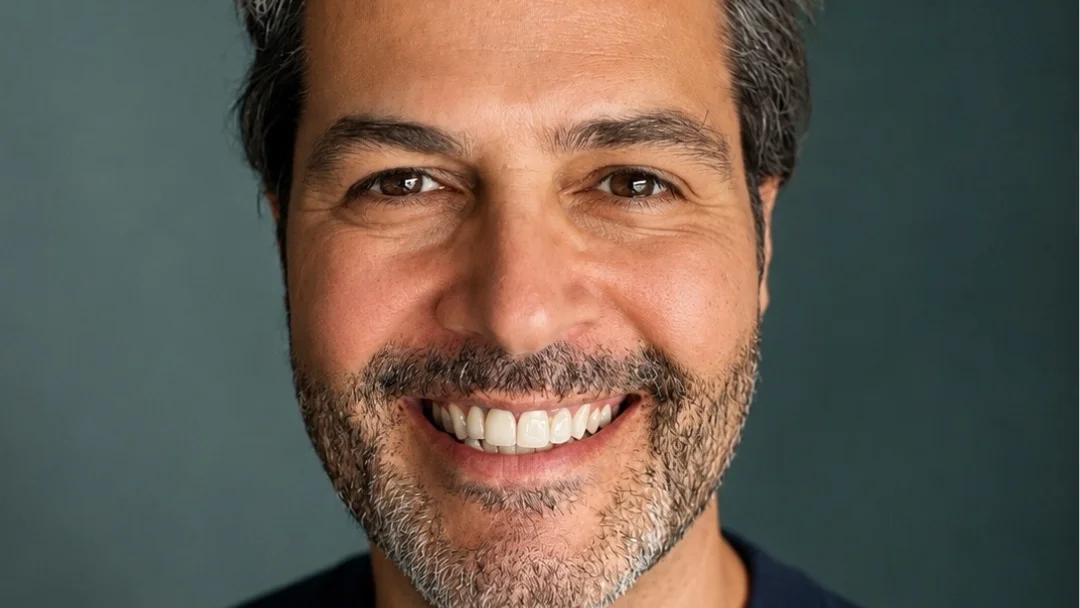
Julio, a psychiatrist and writer from Brazil, moved to New Zealand via London with his Polish wife and young daughter.
In this deeply personal conversation, he shares his spiritual journey moving to New Zealand—how the land, the Māori culture, and the community helped him find himself, reconnect with his creativity, and experience immigration as a rebirth.
This is a story of trust, surrender, and the healing power of Aotearoa
Read the full, raw transcript below to follow Julio’s journey. You can also watch the video version of this podcast below or over on our NZ Ahead YouTube Channel.
This post may contain affiliate links. They cost you nothing, but we make a small commission. Please see our Disclaimer page for more details.
Do You LOVE New Zealand? Sign up below, and I will send you my FREE Moving to and Living in New Zealand Guide.
A 5 Part Video Series!

A Different Kind of New Zealand Migration Story
We’ve had many guests on the NZ Ahead podcast. We’ve heard about shipping containers, visa applications, and the logistics of moving from one country to another.
But we have never had a guest who spoke about a spiritual awakening.
Until now.
Julio is a psychiatrist and writer from Brazil. He moved from London to Palmerston North with his Polish wife and their young daughter. On paper, it’s a familiar story—another family moving to New Zealand for a better life.
But Julio’s journey is different. It’s about the land. It’s about the Māori culture that pulled him into its soul and made him feel alive. It’s about a creative awakening that only happened when he finally surrendered to the unknown.
This is a story about immigration as rebirth. About finding yourself by letting go. About what happens when you stop trying to control everything and let the land take you.
If you’ve ever felt a pull towards something you couldn’t explain, this episode is for you.
For those considering the logistics of a move, our how-to-relocate-to-new-zealand guide covers the practical steps. But this story goes beyond logistics—it’s about the journey’s soul.
Introducing Julio: A Psychiatrist Moving to New Zealand
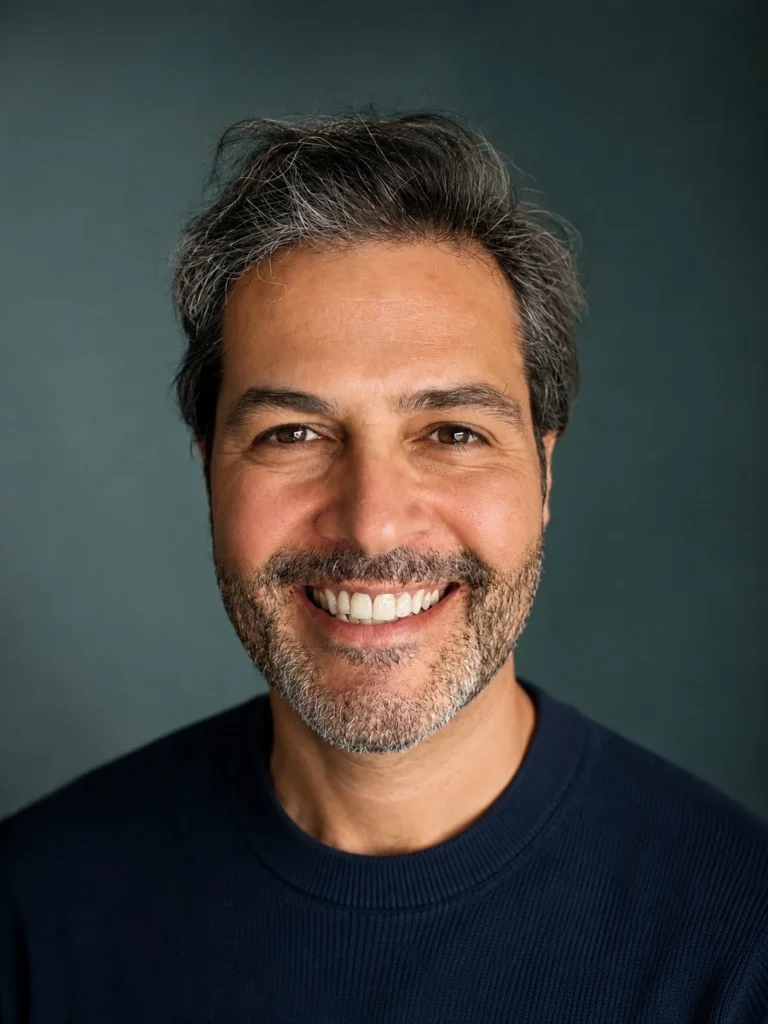
Liz: Julio, you are the very first guest on the NZ Ahead podcast that is going to open this episode with a karakia. I’m going to hand the mic over to you.
Julio: Thank you, Liz. It’s a pleasure to be here. Yeah, let’s start with the karakia.
Hakoto haki.
Liz: That was absolutely beautiful. Even though I don’t know what you’ve said, the words, they just comfort you, don’t they? Could you please explain what is a karakia?
Julio: Yes, that’s the power of Māori. I think the words resonate with something deep in us. Karakia are prayers or incantations that are said in different contexts in the Māori culture—before meals, before meetings, after meetings. It’s to set the mood.
This one, hakoto haki, the translation would be: “To inhale, to breathe out, to calm down, the life essence stirs inside me. Through the ups and downs, it is peace that I’m looking for. Hail to the essence of life.”
It’s a nice way to set us up in a nice mood. It has everything to do with my journey here in New Zealand. This contact with the Māori culture is something that really resonates with me for several reasons.
Liz: I could just do with you standing beside my bed and just saying that over and over again before I wake up in the morning. It’s such a beautiful culture. Thank you for sharing that.
So your journey starts from way back in Brazil and then London and now to Palmerston North. But this is a different kind of chat. This is more an in-depth conversation about a spiritual journey as well as a physical one. Could you please start by saying who you are and where you have come from?
Julio: My name is Julio. I’m a doctor. I was born in Brazil. I live in Palmerston North with my wife and our daughter, who just turned 21 months yesterday. We’ve been here for eight months.
I’m a training psychiatrist here in Palmerston North. I’m also a writer. I work with psychiatry in Brazil for many years. I always had some sort of wanderlust. Even though I was there in Brazil, I had this feeling that something was pulling me out for many years.
I finished med school and decided to pursue the academic career back in Brazil. I did my masters in psychiatry and then got a scholarship from King’s College London to do my PhD there researching addiction science in 2019.
Starting the journey in London, UK
I arrived in London in October 2019, six months before the lockdown. That was a completely different experience of migration. I lived in London for six years. I met my wife there. Our daughter was born there.
But only when we made the move to New Zealand did I fully appreciate the whole aspect of migration in all its sides. The experience of migration in London was quite different. I was a student. I had all the support of King’s College London. Even through the pandemic, we had lots of support. I could work from home. It was more gradual. I could adapt to London.
When we decided to move to New Zealand, I think all this process of immigration, I compare with something we use a lot in psychiatry—the framework called Stages of Change. It involves stages of pre-contemplation, contemplation, preparation, action, and maintenance.
Bringing this to our experience, we were feeling we had a great time in London for many years. London is a great place to live. We were very welcome there for a long time. But my wife and I came from small towns. She’s from Poland. I’m from Brazil. We missed the contact with nature. We travelled a bit throughout the UK considering moving to different places, but it was not easy to find jobs with my level of training out of London.
At some point, we went to a festival quite in the middle of nature and started thinking more seriously about moving closer to nature and leaving those values that we had. It was kind of what we call pre-contemplation—when people are complaining but not really committed to make a change. They just say, “Yeah, this could be better.”
We kept trying to make these changes, but things seemed to be a bit stuck. Until the birth of our daughter. That was a big hit when we realised we need to make a change. The feeling started to build up. We wanted to be somewhere else but didn’t know exactly how. That’s the moment of ambivalence when you are sitting on the fence.
We tried applying more actively for jobs elsewhere in the UK, started broadening the search. At some point, I got in touch with a job agency because I had some friends who worked in Australia. The guy from this agency asked me, “Have you considered New Zealand?” I said, “New Zealand? Yeah, I heard it’s a beautiful place. But not really. Why should I consider New Zealand?”
He said, “They have this amazing relocation packages for doctors. You can work there. They’re going to pay everything.” I was super excited. I told my wife, “Let’s do it. That’s going to be awesome.”
We started reading about New Zealand. This was the time when we found the NZ Ahead podcast. We were just listening to the episodes and really hooked into the idea. Every episode sounded more like the kind of place we were looking for.
Then we realised that there was no relocation package. It was an honest mistake from the agency. But we were already hooked. We were getting more and more excited about New Zealand.
In January 2025, we really committed to the plan. Everything else was not working. We were getting more and more excited about New Zealand. I messaged the agency on the 10th of Jan and said, “Listen, we are full on. That’s what we want. We really want to do it. Just let’s take it from there.”
From the 10th of Jan, exactly one month later, I was signing a contract with the hospital in Palmerston North. They sent me a list of places. We chose Palmy. Everything was aligned with what we wanted.
I had an interview on the night of my birthday. I got the job, we signed it up, and then the next part started. That was the beginning.
This is a beautiful example of a moving-to-new-zealand-reminder—sometimes the universe aligns when you’re ready.
What Was the Spiritual Pull to Move to New Zealand?
Liz: You’ve never been to New Zealand before. You’ve listened to all the podcasts. You’ve done all your research. But what was it that was pulling you? What was this spiritual pull?
Julio: I think it was the land itself. It’s hard to describe when you were not here. I only found out why we were coming to New Zealand once I got here. It was hard to put into words.
We were reading about things that only resonate like the lifestyle. People are more friendly or community-orientated. They do a lot of outdoors activities. A nice work-life balance. The fact that the country doesn’t have a huge population. We have a similar or even slightly larger area than the UK and we have half the population of London. It’s crazy.
People kept saying they have this sense of, “We are glad that you’re here. We need you here because you are part of this community. We’re trying to make this work.”
I started reading about the Māori culture just a little bit. This was another huge thing that happened after we arrived. There was the pulling, but it only became clear when we got here. It was an act of faith. This leap of faith, you jump into the immigration process. I think that’s everything to do with the whole concept of immigration being much more than just jumping on a plane or taking care of logistics.
It has the chance to show you, to get in touch with who you are. You can find so much more about yourself because you’re throwing yourself into this unknown.
We only found out why after we got here, really deeply.
For those considering the new-zealand-skilled-migration-visa, Julio’s experience shows that the emotional and spiritual dimensions of moving are just as important as the paperwork.
Do You LOVE New Zealand? Sign up below, and I will send you my FREE Moving to and Living in New Zealand Guide.
A 5 Part Video Series!
How Does Creativity Fit Into the Journey?
Liz: You mentioned that you are also a writer as well as a doctor. Can you talk to me about your creative side? What does that look like?
Julio: Actually, that was also a reason of ambivalence when we decided to come here. I started my journey in medicine a bit later in life compared to my colleagues. I worked as a web designer. My first degree was in art history back in Brazil. I was doing lots of things related to art. But Brazil is a complicated country. Some professions are very hard to get by. I come from a lower middle-class family. I never had a chance to travel a lot around the world.
The first time I went abroad was when I went to New York for a week when I was 25 or 26. Then I travelled to Portugal when I was in med school. The next travel abroad was when I moved to London.
I was always grappling with this thing between creativity but not being able to pay the bills. I decided to go to med school, which was kind of a dream I had when I was a kid. I set all my creativity aside because I had to dedicate myself to medicine.
When I finished my PhD back in London, I decided to give it another chance. I was reading The Artist’s Way by Julia Cameron. It was a journey, those 12 weeks, writing morning pages, getting back in touch with my creativity. It was so transforming. I think it was one of the times when I felt better in London because I was in that creative space.
I was going to acting classes and joining writing clubs and doing lots of things, at the same time preparing for training in psychiatry and getting jobs. I was very divided between the two.
When the plan to come to New Zealand happened, I remember I was joining a playwriting course. It was postponed for a few months. It was not aligning with the timing. I didn’t know if I should stay in London. I was thinking, “Wow, I’m doing this move to New Zealand. Am I just uprooting the whole thing now that I’m just adapting to London and starting a creative process?”
But at the same time, I felt the pulling to come and it felt like the right thing. I said, “Fine, don’t worry. I’m writing now. I can write from anywhere. Maybe there’s a reason for that too.”
And there was a reason. When we came here, Palmy has a very small community of creative people. They have a writer’s club in the library. I went to this first meeting maybe three or four weeks after we arrived. They were just closing applications for contributions to a local book. I wrote a poem that went to the book. I came to the last meeting when they were accepting pieces.
That was the moment when I started realising, “Okay, maybe this is going to work.” All this creative thing became one of the things that led to the second big commitment and brought a lot of peace as well.
It didn’t feel right in the beginning, but it found its place later on.
This creative awakening after immigration is something many artists and writers experience. When you strip away everything familiar, your creativity has room to breathe.
How Did His Wife Cope with the Move to New Zealand?
Liz: Is Malena, your wife, fully supportive of all this?
Julio: Yes. She used to work in the UK as a doula, which was also a pathway of discovery for her. She started learning about birthkeeping during the pandemic. She changed her careers completely. She became an amazing birthkeeper. She was working with charities in London who support immigrants and refugees who need doulas. She learned so much about her own plans of motherhood. She was super involved. She has a huge network there.
But she was also feeling that it was not the place where we wanted to be for the rest of our lives. This process for us, and I think for many people, is not only about the situation you have at the moment, but where this road is taking you.
She was on board with this—”Let’s give it a try. We can always return to the UK.” She’s a British citizen. Yara is a British citizen. I can apply for a job there again. The doors are open. We can come back.
It was much harder for her. She’s from Poland. She was two hours away from home on a flight to see her mom. I was already far from Brazil anyway. She had to leave a huge network that she built there for many years. She was living in the UK for almost 20 years when we met.
She is very brave to decide to move the nest and bring a small baby here to a new country. I couldn’t have done this without her. She was super supportive and still is.
For those with a partner, our new-zealand-partner-visa guide explains how to include your family in the move.
What Was His First Impression of New Zealand?
Liz: You’ve just come from the busiest city in the world, and you’re in Palmy. What was it like when you stepped off the plane?
Julio: The contrast was so huge. The first impression in New Zealand could not have been better, even before we arrived in Palmerston North. When we got to Auckland, I first felt the difference. We went to border control and we had our residence visas. Because of my job, we could apply for a straight to residence visa. We are residents. We’re going to be permanent residents in about a year and a half.
When we went to border control, the lady checked our visas and said, “You are residents.” We said, “Yeah, we are.” Then she said, “Then welcome home.”
We almost cried. After 40 hours of traveling with a baby, the end of the journey, we were so tired. When she said that, we really felt welcome. We said, “This place has something.”
Then we came to Palmy. We left London in the middle of a huge heat wave. We came across the world. It was the first day of winter. It was this beautiful cold crispy night, no clouds in the sky. The purest air that you can imagine.
The wide roads. Everything was so wide and quiet, full of trees. I was so used to those terrace houses one after the next in London. Everything is a bit crumpled up. Here, everything is so wide. Every house has a little garden. They’re all flat and white.
Then I left home to buy some water and some food for us. It’s like 2:00 in the morning. There was only a petrol station nearby. The smell, it was so pure. This smell of cedarwood and fireplace. It felt so good to walk on those streets.
But our arrival in New Zealand was the hardest part of the whole thing. We had a beautiful time, but we got sick. The first night after we got here, we all got COVID.
Everyone was super sick. We were super weak. We were in a very tight schedule. We only have two weeks to prepare the whole house before I start working at the hospital with night shifts and weekends.
Malena had to be alone with Yara. We didn’t have a house. We didn’t have a place to stay. We were looking for furnished houses which can be really hard to find here.
Thankfully, we found one. And then, after we set up, lots of things happened in this setup that also told us we were in the right place at the right time.
A furnished house appearing at the end of the week just where we wanted. People in the hospital being supportive, giving advice. And people from the community—we couldn’t have done this without Andrea and Heather and other people who already living in Palmy and helped us with heaters, advice.
They came to our house with their car to help us do some shopping, tell us what to do, advice about the town. Without the community, this would have been a nightmare.
At the end of the day, we can only thank you and Brian for setting that up because it’s thanks to you that this network exists.
For those arriving for the first time, our guide on auckland-international-airport-new-zealand-entry-questions will help you navigate your arrival.
Do You LOVE New Zealand? Sign up below, and I will send you my FREE Moving to and Living in New Zealand Guide.
A 5 Part Video Series!
What Were the First Few Months in New Zealand Like?
Julio: And then we were here. And then the real challenge started. Being at the hospital, having to adapt to the new environment, having still the writing thing on the back of my head. “You left this behind. What are you going to do?”
I think for many migrants, you have a process when you arrive. There’s a psychologist called Salman Akhtar who talks about immigration as a process of rebirth—when you find yourself a second individuation, when you find who you are because of the context of immigration.
This rebirth, the finding your identity, I felt it so hard when I came to New Zealand. My job in London was a 9-to-5 job, no weekends, no nights, working in the community, away from the hospital, talking to people in their everyday lives, which I really love.
My job in Palmy was in the psych ward with very severe cases, people who need attention 24 hours. A completely different environment.
I felt a bit in conflict. “What did I do? Throwing away all the life that we had to work in a different environment inside the hospital?”
I think the immigration process for many people involves a lot of guilt and ambivalence. You are so excited. You are happy to be there, but you are worried about the mistakes that you might have made. Did you leave your family behind?
For people who come from their homelands and people who are already immigrants, they are different feelings. If you leave your home place for your big immigration move, you might be feeling a bit conflicted about leaving your family behind, your friends, everything that you built in your home country.
If you are already an immigrant like us, you work so hard to be there in London, to have a job, to have a family, to build things there, and you’re just going to throw it all away to go to a different place.
Everything was working well. The people in the hospital are incredibly supportive. Palmerston North Hospital is an excellent place to work for health professionals. I really recommend. They were super supportive. They still are.
But it is a different environment, a different routine that I was not used to. I certainly didn’t have any time to write in the beginning. I was trying to find my feet.
The first three months were like almost feeling like clinical depression. Really heavy on us. Malena was super stressed setting up the house for Yara. We were trying to find things to do. The weather was not great. It was very, very cold. It was hard for us to move around.
The best thing that we have here—the parks, lots of things to do. Palmy is an incredibly child-friendly place. When the weather got a bit better, we started taking Yara everywhere. We have parks from walking distance from every house, the rivers, the beautiful river pathway. We couldn’t enjoy that yet because we were setting up in the middle of winter.
That was the beginning when things were very hard. It was hard to find my place in this process of rebirth, which I later understood were the necessary growing pains that I think every migrant lives at some point.
Next, You Could Watch Will and Ira’s Migration to New Zealand
How Did He Find His Creative Awakening?
Liz: How does it feel when you write? What does writing bring to you?
Julio: I think writing helps me get in touch with things that I am not able to see immediately. It helps me deal with my fears and help me learn more about myself, the world, and other people. I think that was the awakening that I had back in London.
My first impulse of writing was writing horror stories. I was crazy about horror stories when I was a kid and teenager. I kind of left it aside when I started working. I worked for many years in the justice department back in Brazil and then working as a doctor. I got a bit away from horror because I was seeing so many serious things on my everyday work. But I like the mystery and the flexibility that horror gives you when you write.
When I started writing back in London, I was drawn to write horror again because I could put my fears on paper. London can be a bit of a creepy town sometimes. I was writing in winter or autumn and listening to horror audio books on my way to work. It was so much fun to write all those dialogues and creating the worlds.
I like the way that writing draws you into the world of your story. You just create these environments and you start interacting with your characters.
When this became possible in New Zealand, I think that somehow I knew that when I was settled, I would be able to use that experience to write again. When I had this first chance to write here at the writers club, there was quite an insight about that.
Making another parallel between immigration and parenthood—I think becoming a parent was also something that happened in the middle of the creative awakening. I was worried, “I thought I’m going to have plenty of time now in London to do lots of things, but now I’m a dad, so I won’t be able to do all the courses that I wanted to do.”
When we were here in New Zealand, when the people said, “We need things for the book and we’re going to make a writing exercise—you write about something that is in your mind,” the first thing that came to my mind was a story about a father and his baby girl. So she became an inspiration.
I was expecting parenthood to be a challenge for creativity. Of course, it takes your time, but it opens so many doors in your heart, in your mind for your sensitivity, your creativity, your ideas, feelings that you didn’t know you have. Even the fears that I didn’t know I have. When you are a child, my only fear is about her safety. I’m not worried about monsters and demons. As long as she’s all right.
And then she becomes my inspiration for writing. That was the first sign that it was going to work.
Liz: What does a creative awakening mean? It sounds very spiritual and mysterious. Explain it to me.
Julio: I think this awakening is directly connected to a process of surrender. This was the big commitment that I had to make when I was here in New Zealand. The first commitment was when I said the email to the people back in London and I said, “Yeah, we are in.” And then when we got here, I realised that I was not as “in” as I thought. Things were a bit different.
I think every migrant experiences that you have a lot of expectations and frustrations. I was trying to enjoy all the time that we had in New Zealand, but I didn’t have time for that. And I was asking myself, “What can I do now?”
I always saw myself as a spiritual person. I always try to talk to the universe, to the goddess, to God about what’s the next step. Try to get in touch with that.
I think one of the things that helped me was that in the hospital we have a huge number of Māori workers. It’s something that most hospitals and most working places in New Zealand do—they’re very integrated with the Māori culture. We have these karakia at the beginning of every meeting. Every time that we invite a patient of Māori descent to an interview, we offer, “Would you like to start the meeting with a karakia or would you like to end with a karakia?” All my Māori colleagues are always talking about that. That made me feel much better to be in this very spiritualised environment.
When you get in touch with your emotions and you ask mother nature to calm you down and you go to the river, you go to the forest—that connection that the Māori have with nature, it’s one of the greatest gifts I think that Aotearoa had to give to the world. We have this great privilege of living with the indigenous culture that is flourishing. It’s being kept alive. The language is alive, the culture is alive.
I come from a family. My grandmothers, they were native Brazilians. But this is not something that you talk in your everyday life because the indigenous cultures of Brazil, they were decimated hundreds of years ago. We don’t learn the language. We don’t even know the hundreds of languages that we had there.
Coming here and getting in touch with this helped me realise that there was something that I could reach out to. And that was the land—the land of New Zealand, the land of Aotearoa. That’s something in the land that is there to welcome you.
I think this is what we feel when we come here. This is why it’s so hard to explain before we arrive.
I remember being in a river in Ashhurst, a place not far from Palmy. We were there in a river, the three of us, went for a swim. I was by myself at some point just praying and talking to myself and saying, “What should I do? I know that I am in the right place at the right time, but I don’t have time for writing.”
People in the hospital offered me a chance to join the training program to become a consultant psychiatrist. They made an opening for joining the training program like an exception in that year.
They usually make only two openings, but they decided to make a third one around October. I was just here at the right time.
I said, “Wow, if I do that, I’m going to commit myself for the next five years to be in this training program.” It’s demanding, but I’m going to be a consultant psychiatrist at the end of that.
I’m going to have more flexibility, more means to do things, more options, places to live, and more control over my schedule. But it’s a huge commitment. I didn’t know if I was prepared for that.
That day in that river, when I was praying, I felt like the earth, mother nature, or how they say here, Papatūānuku, was talking to me and said, “Trust me, mate. Just trust me. I brought you this far, didn’t I? You are here. You’re safe. Just let it go. Just let it flow and release control.”
Then I said, “Wow, okay then. Let’s do it.”
When you reach a crossroad, crossroads are dangerous places because they’re exciting—everything is possible. You have lots of options there. But if you stay in the crossroad for too long, the different options start dragging your energy in different directions.
So you need to take a step forward sometime and you say, “I’m going to do this.” And that moment you’re going to commit to do that next step.
That’s what I did. “Fine. I’m going to do the training and I’m going to become a consultant psychiatrist.” And when I did that, my heart was peaceful enough so I could write. So one thing fed the other.
I started talking to other writers. I started reading more about people who have to work 9-to-5 and still feed their creative passions. It’s amazing how they start helping each other.
Finding community in New Zealand is what made this possible—the writers club, the hospital colleagues, the NZ Ahead community, the Polish moms. Community is everything.
Do You LOVE New Zealand? Sign up below, and I will send you my FREE Moving to and Living in New Zealand Guide.
A 5 Part Video Series!
How Does Māori Culture and the Land Connect to His Healing?
Liz: When people say, “What is it about New Zealand? Why did you want to move?” It’s so hard to answer. But what you’ve just described about the land and the people and the connection—that’s it.
I think when you’re given that in abundance in New Zealand, if we open ourselves to it, it comes to you. It finds you and it feeds you and it frees you.
Julio: I think that when I start getting in touch with it, I was a bit worried as well. Even talking to my friends, I was wondering, “Is this cultural appropriation? Should I be saying karakia all the time in my house?” And my Māori friends just said, “Yeah, man. By all means. Just do it. That’s okay. No problem.” Because they are happy to share that.
When you do it respectfully, of course, I’m not going to make a moko on my face. This is something only reserved for Māori people. But the thing about being in contact with the indigenous culture—and the Māori in particular because it’s a culture that survived for so many years—the point is not to become Māori.
The point is to get in touch with your own indigenity, with your own roots. To connect to your family, to connect to your whakapapa, to connect to your land, to connect to your people.
Even I feel closer to my people in Brazil, even to the land in Brazil than I was in London. Maybe when I was in Brazil, we never got in touch with our indigenous roots.
For people who are not from Brazil, it’s hard to comprehend the level of—when you live in a colonised country for so many years. I’m going to tell you something horrible about Brazilian culture.
When I was a child, what we learned about the Brazilian indigenous people was that they did not adapt to slavery because they were too lazy. And because of that, the Portuguese needed to bring Africans to work in the fields. That’s it. We don’t talk much about the indigenous culture. We just say these are the lazy people who didn’t want to be slaves. Nobody wants to be a slave.
The people were just decimated one by one for hundreds of years. We don’t talk about that culture. I have these ancestors that I had to search for them. I used to listen to the stories of the Amazon forest from my parents. Both of my parents were born in an Amazon state in the north of Brazil, and I grew up in the south.
They were always telling stories about the Amazon forest and the fantastic animals and things like that. But I had this privilege because they were born there. It’s not something that we learn all the time. It’s more like a curiosity.
When we talk about this with the Māori people, we see that this is such a gift for non-Māori as well. If they can get in touch with their roots. Doesn’t matter where they are from. If they are from Britain, if they are from countries who are also colonised, or countries who lost touch with their roots for a long time because they have a very early industrial process like Britain.
How important is it to get in touch with your British roots? To see the history of your family? Because these roots, they take you anywhere. It’s not the roots that drag you down. They are roots that give you ground to fly.
This is what we feel. This is very positive. I think it’s one of the privileges of being here. This is why I think being in contact with the Māori culture helped me with the process of migration in general. Even facing these challenges in the beginning.
When you look at the rituals like the haka, when they make this aggressive song and put this energy out, even things that we propose to the patient sometimes—I talked to the occupational therapist at the hospital and said, “Listen, maybe these people need some output for anger. Let them scream and do the haka.” You are showing how brave you are. You are showing the face. You are facing the challenge of the land.
Imagine being here in New Zealand, arriving in a canoe thousands of years ago without having anything, having to hunt and stuff. They just faced the challenge. “I am here. I am alive. I am doing this. I need your help. Bring to the land and let’s do it together.” You reach out to the people around you. You build your whānau. You build your community. That gives you so much strength.
What we have in the NZ Ahead community is a whānau. How much we help each other. The other people had to reach out. We are here. We talk about this so many times in this series—how this process brings to New Zealand a special kind of immigrant.
People who decide to make this crazy journey to the middle of the ocean. We have so much in common. Sometimes it’s hard for people who are not here, even for our families that love us dearly, it’s hard for them to understand the depth of some challenges that we live.
But we understand each other. We understand the land. We get strength from that. And that’s beautiful.
This spiritual benefits of moving to NZ is something that can’t be explained, only experienced. It’s why so many people feel a sense of home here that they’ve never felt anywhere else.
For those from South America, our moving-from-france-to-new-zealand guide offers some parallels for European migrants, though Julio’s story is uniquely his own.
And for those who worry about the downside-of-moving-to-new-zealand, Julio’s honesty about the first few months is a reminder that the difficult period is often temporary.
Do You Feel at Home Now?
Liz: So do you feel like you’re at home now? When that lady said to you “welcome home,” do you feel like you’re at home?
Julio: I do. I have no doubt. We didn’t have the chance to travel a lot around New Zealand. We’ve only been to Wellington a couple of times. I have to go to Porirua near Wellington every week for my training. But we feel that we need to travel a bit more to decide where exactly we’re going to set roots.
It was such a privilege to arrive in Palmy. It’s a wonderful place for children. I’m going to have to move because of my training to do some part of my training elsewhere. So we’re going to have a chance to move around. But I have no doubt that New Zealand is our home. We found ourselves here and we’re very happy to be here.
Liz: You said what those first few months were like when you got to Palmy—”Oh, what have I done? I left all my writing behind, my creativity.” And actually, when you look at it, you didn’t leave it behind. You were running to it. You were coming to it. You finished your play. I love it.
Julio: Yes.
Closing Karakia
Liz: Would you like to end this meeting with a karakia as well?
Julio: This one is about—I’m going to say the translation beforehand so we can finish with the karakia itself. This is one that we usually make in the beginnings of meetings but is one of my favourites.
It says that may our paths be as smooth as the green stone from the pounamu. May we show respect to each other. The love that you give is the love you receive. Blessings to you all and go on in peace.
[Karakia in Māori]
Liz: Thank you. That is absolutely beautiful, Julio. Thank you so much for being such a wonderful guest and for being part of our community. Give my love to Malena as well.
Julio: We’ll do. Nā mihi nui. Thank you so much.
Key Takeaways from Julio’s Spiritual Journey Moving to New Zealand
| Lesson | Julio’s Experience |
|---|---|
| Trust the pull | The calling to New Zealand was unexplainable but real |
| Surrender control | The river taught him to let go and trust |
| Community is everything | Without the NZ Ahead community, settling would have been so much harder |
| Creative awakenings happen | His writing found a new home in NZ |
| Māori culture heals | Connecting with the indigenous culture helped him connect with his own roots |
| Immigration is rebirth | He found a new identity and purpose |
| The first months are hard | But necessary growing pains lead to transformation |
Frequently Asked Questions About Moving to New Zealand
Q: How do you move to New Zealand as a psychiatrist?
A: Julio applied through a job agency and secured a position with Palmerston North Hospital. Healthcare workers are on the Green List, which offers a Straight to Residence pathway.
Q: What is the Māori concept of health?
A: The Māori model of health, Te Whare Tapa Whā, includes four pillars: physical, mental, spiritual, family/community, and the land. This holistic approach deeply resonated with Julio.
Q: Is Palmerston North a good place for families?
A: Yes, Julio describes it as incredibly child-friendly with parks, walking distance to everything, and a warm community.
Q: What if you’re worried about cultural appropriation with Māori culture?
A: Julio’s Māori colleagues encouraged him to engage respectfully. The key is to connect with your own roots and engage with an open heart.
Q: How do you find community in New Zealand?
A: The NZ Ahead community, local activities (like baby bop at the library), and workplace connections helped Julio and Malena build a network.
Julio’s Advice for a Spiritual Journey Moving to New Zealand
| Advice | Why It Matters |
|---|---|
| Trust the process | The land will guide you if you let it |
| Surrender control | You can’t control everything—accept what comes |
| Connect with community | You can’t do it alone |
| Find your creativity | New Zealand will awaken parts of you |
| Embrace the hard months | Growing pains are necessary |
| Engage with Māori culture | Respectfully, it will enrich your journey |
| Make the leap | You’ll find yourself on the other side |
Do You LOVE New Zealand? Sign up below, and I will send you my FREE Moving to and Living in New Zealand Guide.
A 5 Part Video Series!
Ready to Start Your Own Journey to NZ?
Julio’s story is proof that moving to New Zealand is more than a change of address—it can be a spiritual journey moving to New Zealand that transforms who you are.
If you’re ready to start your own journey, here are your next steps:
-
Head over to nzahead.com/free for our free 5-day video guide on life in New Zealand.
-
Join our private NZ Ahead community on Slack for support from people on the same journey.
-
Explore our guides on new-zealand-work-visas and moving-from-united-states-to-new-zealand (the principles apply to all migrants).
For those who have experienced a nz-visa-denied situation, don’t give up. There are always options.
And if you’re considering a visit before committing, our best-time-to-go-in-new-zealand guide can help you plan.
Your own spiritual journey moving to New Zealand is waiting. As Julio discovered, sometimes you have to let go of control to find yourself.
Nā mihi nui. Go in peace.
