

VD, a former US Marine from California, moved his family to New Zealand’s Kapiti Coast in 2025.
In this raw and emotional conversation, he shares how moving to New Zealand from the United States exceeded his expectations, helped his family heal, and allowed him to discover his true self as a poet and performer.
This is a story of trust, signs, and the spiritual healing that New Zealand offers.
Read the full, raw transcript below to follow VD’s journey. You can also watch the video version of this podcast below or over on our NZ Ahead YouTube Channel.
This post may contain affiliate links. They cost you nothing, but we make a small commission. Please see our Disclaimer page for more details.
Do You LOVE New Zealand? Sign up below, and I will send you my FREE Moving to and Living in New Zealand Guide.
A 5 Part Video Series!

Meet VD. An American Who Moved to New Zealand
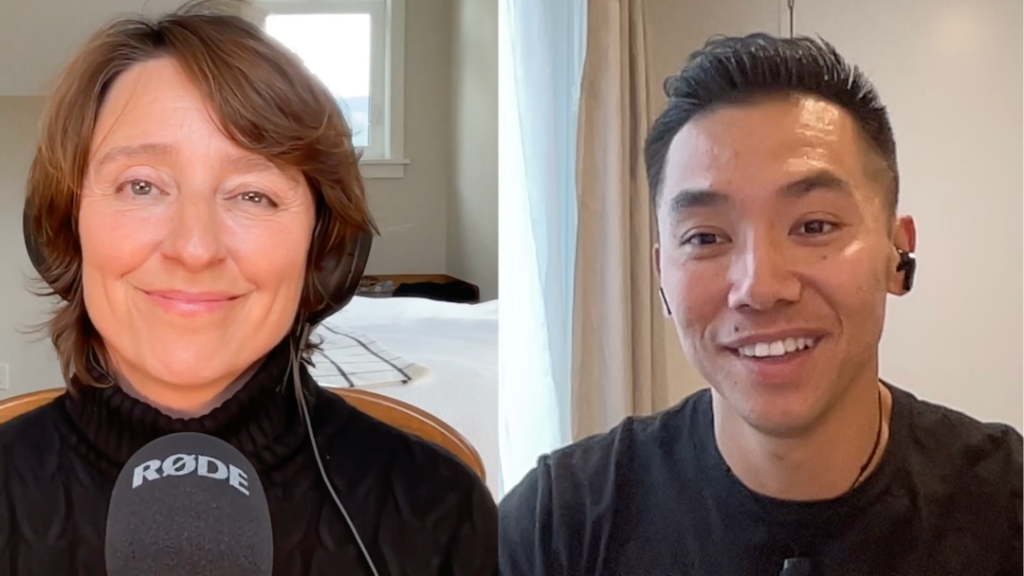
Some conversations stay with you long after they end.
This is one of them.
When VD joined me for this podcast, I knew his story was special. He’s a former US Marine, a husband, a father, a poet, and one of the most open-hearted people I’ve ever had the privilege of speaking with.
He moved his family from California to New Zealand’s Kapiti Coast—a place he’d only ever visited on honeymoon a decade earlier. He followed his heart, trusted the signs, and took a leap of faith that most people only dream about.
But this isn’t just a story about moving countries. It’s about healing. It’s about finding home within yourself. It’s about what happens when you finally allow yourself to become who you were always meant to be.
If you’ve ever wondered what it really feels like to start again—to leave behind everything familiar and build something new, VD’s story will speak directly to your soul.
Whether you’re researching the new-zealand-skilled-migration-visa or wondering is-new-zealand-a-nice-place-to-live, VD’s experience offers a glimpse into what’s possible when you trust the process.
He is living proof that moving-to-new-zealand-from-the-united-states can be transformative in ways you never expect.
Inspired by VD’s story? Join hundreds of other Americans who are making the move to New Zealand. Sign up for our free 5-day video guide and see if New Zealand is right for you.
Do You LOVE New Zealand? Sign up below, and I will send you my FREE Moving to and Living in New Zealand Guide.
A 5 Part Video Series!
Quick Facts About VD’s Move
| Question | Answer |
|---|---|
| Where did he move from? | California, USA (Bay Area) |
| Where did he move to? | Waikanae, Kapiti Coast, New Zealand |
| Why did he move? | Following his heart after falling in love with NZ on honeymoon 10 years prior |
| How long has he been in NZ? | 1 year (as of this recording) |
| Family members | Wife Hien, daughter Raewyn (10), son Otis (8) |
| Visa pathway | Wife’s job offer as a pharmacist |
| What does he do now? | House husband, poet, spoken word artist |
Key takeaway: Moving to New Zealand from the United States is possible at any stage of life. VD and his family made the leap, and you can too.
Introducing VD: A Marine’s Journey to New Zealand
Liz: VD, welcome back to the NZ Ahead podcast. For the second time, I’m thrilled to have you back here with me.
VD: I’m so, so again, I’m excited and just to do this one year recap. It’s such a great time for me and our families just to share everything that we’ve been going through and just to let you know right now, it’s been a dream.
Liz: It’s been a dream. Okay. I cannot wait. I’ve been looking forward to this so much. For the people who didn’t watch your first episode, could you please give us a quick brief of who you are and how you came to be in New Zealand?
VD: Yeah, for sure. My name is VD. I’m from California, the Bay Area near San Francisco. My wife is Hien. I’ve got a 10 year old daughter now, Raewyn, and an eight year old son, Otis.
As the title said on the first interview, USA Marine moves family to New Zealand. I was in the Marine Corps for 12 years and one deployment in Iraq 2008 came back 2009 and knew that my life had to change.
Met my wife that year 2009. We had a honeymoon here 10 years ago in New Zealand. Fell in love. Ten years later, we’re here with our family, living the dream.
For anyone considering moving-from-america-to-new-zealand, VD’s story shows that following your heart can lead to extraordinary places.
Why New Zealand? A Comparison
| Factor | California (Before) | New Zealand (After) |
|---|---|---|
| Pace of life | Fast, high pressure | Slower, more relaxed |
| Community | More isolated | Warm, welcoming, open |
| Children’s activities | Limited | Abundant (Kapa Haka, Kung Fu, Touch Rugby) |
| VD’s mental health | Struggling with trauma | Healing, peaceful |
| VD’s creativity | Suppressed | Thriving (spoken word, poetry, coffee) |
This comparison shows why moving-to-new-zealand-from-the-united-states can transform every aspect of life.
What Happened When Reality Met Expectation?
Liz: You held New Zealand in your heart for so long while you were living in the United States. Has the reality of living in New Zealand been anything like you thought it was going to be?
VD: Man, reality versus expectations, right? It exceeded my expectations. It totally exceeded it. Things that you can’t explain, things that has happened to us, I could have never come up with it. It just came to us.
Just bringing that positivity and just living your day and being open to opportunities, to meeting new people, saying yes to activities and experiences, leads you to different things. It’s like a stepping stone towards happiness.
I said this in the last interview about being silent, right? Because silence is compliance. You have to speak it up. And I shared that quote about being silent on our hearts already know the melody to the song. Our minds haven’t heard the words to yet. You simply have to speak it out to existence.
It wasn’t about expectations. It’s about just living in alignment with who you are and accepting anything that comes your way. Because of that, I wasn’t let down when things didn’t come my way.
“I can’t express how much gratitude I feel with my family and our growth and how close we’ve gotten ever since we moved here in just 365 days.” – VD
Now I can sit down with my guard and just tell you right now on the record with everyone here that yes, man, it’s just been a dream. And the things that have come to fruition in our family, oh man, it’s like, I don’t know, sometimes I feel like, how did I get here? How did I deserve this?
I feel guilty sometimes, because I know people are trying to come here. It doesn’t have to be New Zealand, it could be anywhere else, but just because you’re following your heart, you’re trying to get to a place of fulfillment, not just success.
I can’t express how much gratitude I feel with my family and our growth and how close we’ve gotten ever since we moved here in just 365 days. How much we’ve grown. This has been wonderful.
When people ask “is New Zealand a nice place to live?”, VD’s answer is a resounding yes—it exceeded every expectation. For those with concerns about health-requirements-for-a-nz-visa, VD’s family navigated the process successfully.
Do You LOVE New Zealand? Sign up below, and I will send you my FREE Moving to and Living in New Zealand Guide.
A 5 Part Video Series!
Where in New Zealand Did He End Up?
Liz: Whereabouts are you in New Zealand?
VD: The Kapiti Coast.
Liz: And you went there and you stayed there. You didn’t go anywhere else. Is that right?
VD: Yes, yes, yes. The first job offer that my wife Hien got was in Paraparaumu at the Countdown Mall as a pharmacist. We looked around for schools and everything and we ended up in Waikanae. And we’re still here.
Liz: You love it? Obviously?
VD: Yeah, love it, love it. It’s the first place. I do understand the sentiment around the Kapiti Coast, right? You got from Pākākāriki, Raumati, Paraparaumu all the way up to Ōtaki. And now see, like, I can say those places, I know my geography now.
I just love that coastline, all those beaches and all the personalities. There’s a different town already from the southern part of it to the most northern part. It’s like different people, you know?
I go to Ōtaki every week for my kids’ Kung Fu. And we have family and friends down at the bottom, at Raumati and Pākākāriki.
And I cannot believe that the United States Marines Memorial is on the Kapiti Coast. Of all places, being a Marine myself, seeing the sign from the motorway, “US Marine Memorial,” I just like, what is this?
Me and my son did a 14K trail run through it. Seeing the barracks and all the placards and the history, went to the museum, learned about it. So much history with the Marines being here in 1942 during World War II.
That’s just one of them that I just felt like as a Marine of all places in New Zealand, we landed here where the Marines landed in 1942. Just to take in that history, that part of myself.
The usa-marine-moves-to-new-zealand story is one of our most popular episodes, and this follow-up shows how the journey continued. If you’re considering moving-from-united-states-to-new-zealand, the Kapiti Coast is a beautiful place to start.
What Signs Did He Experience in New Zealand?
Liz: In our last episode, you talked a lot about signs and I’m a huge believer in this. To see that sign for the US Marines Memorial, you must have just thought, “I’m here, this is calling to me.”
VD: Check this out. Not only when my son and I ran the 14k trail run through Pākākāriki Queen Elizabeth Park, having the US Marines Memorial there, you know as we collect the bib numbers to where the number to run, the number that I got of all the numbers that I got was 420.
I said this in our interview, my best Marine buddy passed away on April 20th. When I got that bib number, it said 420 on it. April 20th, and I’m running through the Marines memorial, just thinking about him, the day, and just sharing, just remembering that I told him before he passed that I’m moving to New Zealand, he said he would visit me. And he sure did.
Yeah, these signs, right? I know it sounds woo woo, right? You tell your friends, it’s just a coincidence or no way, you know? But you have to just lean into it. Just lean into it for once. We’re not alone in this galaxy. We’re not alone. We’re not alone. No one’s alone, right? We’re here for each other. We’ve got each other’s backs. And just know there is a special person watching you from above.
Liz: Thank you. Thank you for telling me that personally. And everyone listening to that just takes that as such a personal message.
Do You LOVE New Zealand? Sign up below, and I will send you my FREE Moving to and Living in New Zealand Guide.
A 5 Part Video Series!
How Did the Kids Adjust to Moving to New Zealand?
Liz: Was everything plain sailing for the kids as well? I don’t mean to put a downer on it, but what’s your family like? Were there any tough times?
VD: Look, we’re a normal family. There’s nothing that separates us from anyone. We have our trials, we have our struggles, we have our pains and sorrows and good valleys and peaks.
That’s why there’s that father and mother dynamic, right? The father kind of would hold it together and say, push through, and then the mother is consoling and the one where the kids can come to and cry to and hug. It’s my job to uphold that peace and joy.
Yes, for example, my daughter did have a hard time. She was in tears and emotional and really missing California. I changed my wording from saying “home.” I don’t say “back home” anymore because this is my home. It took me a little bit of time, but now I switch it from “family back in California.” I don’t say “back home” because this is my home now.
I tell my daughter, “Raewyn, you’ll always have your family in California, your friends there in California. Remember the elevator analogy I told you? We’re in an elevator. We’re going on to top floor right now. If you want to get on the next level, you need to let people out. There’s a maximum capacity. Let them out. Press your button wherever you want to go in life. Go up. You’re going to have to get out of some floors, experience that floor, get back in the elevator, come back up.”
As much as it was painful, I know that heartache. Being away from my wife, Hien, when she was volunteering overseas for six months, that was the biggest heartache for me. I never knew that that was a physical thing, so invisible but so real at the same time to feel that heartache of missing family. When I went to Iraq, that was hard.
When I saw my daughter going through that, and my son Otis, I looked at it as a gift. I told my wife, let them please just let them feel it. They’re eight years old, they’re 10 years old. They’re gonna feel this heartache at some point in their life. Now, it’s a safe feeling. We’re here with them. Let them feel it.
It’s still a thing, right? There are good days, there are bad days, but there are more, way more good days. Every now and then they do miss California. It’s only been one year.
We’re not trying to create a copy of what we had back in the States. This is totally different. But now they have such a worldly view about everything.
We put them in Kung Fu, Raewyn’s doing piano, the Kapa Haka, they’re both in Kapa Haka too, doing all the Māori traditional dances and singing, the pōwhiri, the introductions at school, going to the marae. They are just excelling. From Touch Rugby, I coached soccer for Otis. I was fortunate to coach Touch Rugby on the last game. It was just so much fun.
They’re very busy. They’re doing a lot from hip hop dance to theatre. I’ve been meeting so many people through the kids. Because of that, I think the community really held us tight. They held us together. I have families and friends that I can talk to anytime I have a down day. It’s a great place. People are so open, just meeting us and asking how we’re doing.
And it won’t be like California. And there’s a reason for it. It’s for growth.
For families wondering about life-in-new-zealand, VD’s experience shows that children thrive in New Zealand’s welcoming environment.
Next You Could Watch:
Raising Kids in New Zealand – Everything you need to know!
How Did VD Redefine the Meaning of Home?
Liz: The word “home” is very personal. You’ve just said California is no longer home and New Zealand is home. What creates the feeling of home for you? What makes somewhere home?
VD: Man, it has to be peace. Just have peace of mind, you know? Just to come home and feel, like I said, it’s not a place of success. It’s a place of fulfillment that really makes you feel like at home. Listening to the beat of your own drum, following your heart. That’s home to me.
I’m not saying that California will never be home again. It was a home for me. But now that I’m here with my wife and kids, this is our home. This is our sanctuary. This is our place.
Come home like when we talk about comfort food. We’ve been cooking, I’ve been cooking a lot of Vietnamese food and it really takes me home. That’s the feeling. It’s not a place. It’s a feeling. Home is just with your family and who you feel like you can become. You’re coming home to yourself.
“Home is not a place. It’s just a feeling.” – VD
I know at the end of all this, when I’m like 80 years old and I look back and I go back to where I was born, back in Oakland, California, and I just look around and just think about, okay, I was born here. That was my nationality, American. My ethnicity, I’m Vietnamese. I was born in Oakland, California. Yes, that was my root. That was my home. But home doesn’t have to be that one place forever.
We are such travelers now. It’s 2026, we can live anywhere. Who’s to say home is where you were born? Who’s to say home was where you grew up with your mom and dad? Just generation before, my mom grew up in Vietnam. I grew up in America.
My kids are gonna grow up in New Zealand. What’s home for them? I don’t know. Home is just where we’re at here together as a family, as a unit, and to grow together. That’s home. That’s where we place our roots.
We’re just planting ourselves in different places. It’s just, it’s not a place, it’s just a feeling.
What Is He Doing With His Days in New Zealand?
Liz: When we last spoke, you said that you wanted to bring Vietnamese coffee to New Zealand. Did that transpire or are you doing something else?
VD: I’m learning to be a first time house husband. I like that better than stay at home dad. Three or four people have told me, you’re a house hubby, you’re a house husband. I like that. I’m a house husband.
I do most of the cooking and we shop around and a year now, we found a couple of Asian grocery stores in Porirua and the Lower Hutt that had Vietnamese coffee, had the beans. I can’t explain my elation when I saw it. I bought them all. I bought all the boxes.
The specific condensed milk that I used for this Vietnamese coffee is actually nearby at New World. I stocked up on that. I must have made probably over 100 cups of coffee for neighbors and friends. I made it for the whole school staff as well. I invited all of them into the office.
I joined the PTA. I am good friends with the PTA president. As I said, I was a PTA president in the past for three years and I’ve met the PTA president here. We’re good friends. We just went to his daughter’s birthday party. Everyone loved the coffee. I haven’t met anyone that said, “I don’t like it.”
I do want to start something, but right now I don’t feel like it’s the time. We’re in the middle of possibly moving to another part of Waikanae. So my focus is on that right now. But the idea of selling coffee is still there. I do want to open one up at a farmer’s market. I’m still testing it out on how to make it in big batches because what if I run out quick? So I’m trying to find the supply and I got their direct phone number and they would text me and tell me that they got more units.
Liz: What is a Vietnamese coffee? Tell people what it is.
VD: Vietnamese coffee is, I believe Vietnam is the second largest coffee producer and robusta beans. That’s the type of beans that is used and it’s strong. You cannot do a French press or a plunger here. You can’t put it through the espresso machine. It’s going to come out too fast, too quick. There is a big difference.
There’s a fin, it’s called a phin filter. P-H-I-N. A phin is usually in three parts or four parts. You have the saucer with the holes and then a container that goes on top of that with holes underneath as well. You pour the coffee in there and there’s a weight, a gravity weight that you drop in there and you pour the water in and it drips out very, very slowly over your cup. It yields like 30 milliliters of coffee.
Then you add your preferred condensed milk to your liking, your sweeteners, sweetness level. Stir it up, pour it over ice. In Vietnam, it’s always hot and humid, so it’s always over ice. Rarely do you have hot coffee in Vietnam.
Here in New Zealand, it’s all about hot coffee. So I feel like maybe if I can dive into this market with a cold coffee in the summer, or you want something different. That’s what it is. It’s iced Vietnamese coffee. It’s very strong. You do not want to have this coffee at 12 or even like one, two, three. You’ll be up all night. And it’s very good. People love it.
Did VD Bring His Full Self to New Zealand?
Liz: When you left America, did all of VD come over to New Zealand or did you leave a part of yourself behind in America?
VD: Gosh, man, you just, how did you know this? I feel like I’m in a therapy session. I did not prepare for this.
I think what I’m leaving is just… Being in the Marine Corps, just in my time in Iraq, just really kind of screwed me up in those years after. A lot of myself that I’m leaving behind is trying to forgive myself and forget that and allow people to not understand what I went through. Not everyone’s gonna understand. I have to let that go.
Coming here, I’m still my full 100% VD energy. I express my love to everybody. I express my time in Iraq too, everything. All my struggles. But the one thing that I just want to leave in the United States is that past trauma that I went through. I don’t want to take it with me. This is not where I want to start my life here.
I do still have my days. I curl up in a ball. To be honest, I let it out. But I snap out of it a lot quicker. Before, in the States, I would just be in the room or just panic attacks and had to hide myself. I’m sharing the story and not everyone understands.
When you asked me that question, the first thing that came to my mind was my mom. What’s cool is that just couple days ago I did a spoken word performance at a nearby coffee shop. It was about my mom. It was about her not understanding why we moved here. And that’s something that I’m leaving behind. Not just leaving my mom behind, but leaving behind the idea that I had to have her understand my big why, why we came here and also to understand my struggles when I was in Iraq and 10 years after that.
That’s what I’m leaving behind and I’m at a really good place now. I’m so glad you asked that.
Liz: Because I feel this thing with you. I feel it. I know you feel it too. I feel this connection to you. And when you speak, it sings to my heart. It really does. And that’s why I had to ask you that question.
Watch VD’s First interview we did together Last year!
What Is Spoken Word Poetry and Why Does He Do It?
Liz: Please will you just tell me what a spoken word performance is? What does that mean?
VD: A spoken word performance… I am a poet. I want to be a motivational, inspirational poet and spoken word artist. I have a lot of thoughts in my mind and it’s about figuring out how to transfer that pain from transferring that pain into pencil onto paper and to put it all out there off from pages to stages.
That’s poetry right there. Using words and alliteration and intonations of the voice, putting your blues out there into the audience and let them allow them to feel your story through wordplay, storytelling. Instead of someone looking at a piece of art and interpreting it for themselves, which everyone can see it differently, spoken word poetry, the person is on stage and in front of the crowd and performing it.
It doesn’t have to be memorized, but I like to memorize it. It allows you to move around and express yourself. It’s very Shakespearean and you’re moving around and being very active and interactive sometimes. I love it.
I’ve done several spoken word performances here already at the local coffee shops. The very first one I did was called Zygomaticus. That was my very first spoken word that I wrote in one day at work when I was just full of love. It was for my wife for our anniversary. I spoke about my kids in the poetry, spoke about how we met. The zygomaticus is the muscle in your cheek jawbone that lifts up and back that makes you smile.
I started a public Instagram for my spoken word. It’s not just spoken word poetry. It’s just a lot of just sharing myself. I did a video of me about speaking your truth, coming out to the beach, screaming out into the ocean and just saying to myself, “I deserve this.” I have some videos of me and my kids and teaching them life lessons.
The only reason why I did the last spoken word poetry about my mom is because I walked by the coffee shop and Yvonne, he’s from New York, the coffee owner from New York, he goes, “VD, come in here. Hey, we have an improv night Thursday. Come here.” I like, “You know what? Yes, I’ll be there. I’ll be there.”
It’s moments like that. People call you out and put you on the spot. You have to just lean into it. If someone says that to you like that, and you’ve been thinking about it, yeah, that was a huge reminder. “Okay, if you’re not gonna do it for you, someone just set this individual to me and say, hey, you need to get on this.”
And I did it and it was wonderful. I met a lot of good people. These improv nights are great. So many cool musicians and artists and singers.
Do You LOVE New Zealand? Sign up below, and I will send you my FREE Moving to and Living in New Zealand Guide.
A 5 Part Video Series!
What Has New Zealand Given Him Creatively?
Liz: You come from California, which is surely where all the movie stars and creators come from. Do you feel that New Zealand has given you more of an opportunity to be your more creative self?
VD: Definitely, just a mere fact that the population here is a lot less. There’s no time restraint. “Hey, you only got five minutes on stage, or you only got 10 minutes.” Or the crowd is so large it scares you away. There’s so many coffee shops, so many improv places that you can join, so many opportunities.
But it’s not just that. I feel like the audience here is so much more open to just so much more engaging and open to hearing your story. When I introduce myself, I say “my name is VD from California” and already that kind of lights up the interest. “What’s this guy gotta say? Like what’s his take?”
I’m not just American coming from California, but I’m Asian, I’m Vietnamese. I do stand out. I know there’s not that many around here. Especially when I say I was a former Marine. And that’s when the crowd goes like, “Whoa, what’s he thinking?”
Whenever I speak, I think they really sincerely want to know. But then I think it’s a surprise to them as well because when I share stories about my mom or struggles or any one of my poems, it removes all that layers of who I am. I’m just like you. I’m just like you. We all have the same stories.
Whatever stage you want to perform on, whether in the States, in California, in San Francisco, to LA, you have to just speak it. You never know who that one individual in the audience will be, who it might be someone from New Zealand.
I would say for comedians too, you will have the floor. There’s not much heckling. “Hey, you can have all the time you want. You can be on the stage for 30 minutes, an hour, and no one’s gonna judge.” Everyone’s very open to it. You make a mistake, it’s fine. It’s called improv. It’s real. We welcome the mistakes. It’s your stage to shine, to practice.
For creatives exploring cities-in-new-zealand, VD’s experience shows that smaller communities offer big opportunities.
Love Creativity and the Arts? Watch This Video Next!
Why Is New Zealand So Special Spiritually?
Liz: What’s so special about New Zealand? There is something in the air, the nature, the land. There is something that is very magical, enriching. It is spiritual.
VD: It is very healing. This place is spiritual.
Liz: There you go. That’s the word I wanted. Spiritual. Talk to me about that. Tell me more about that.
VD: Man, just, it’s hard to put into words. When we went on our family hikes on trails and going to the beach and just looking around and feeling the sun on your face, just the wind, it can’t help but just think like, it’s like the further you are away from the world, the closer you are to home. To me, that’s how I feel.
Cut all that noise. Cut all the noise out. And then you really, really open up your eye to that third eye, if you will, to that world and just let it flow through you, through your peace and that feeling of home. It feels wonderful.
I’m sure there are many places like this in the world. But because of all the reasons why I’m here and why I love New Zealand, that it has this too. On top of everything, it has this too. It’s the people, it’s the community, it’s the ocean, it’s the sun, the mountains, the trees, the birds. It’s everything.
I think even Kiwis or New Zealanders, Māori, even those that live here, don’t even see it. Some people don’t even see it. And I come in from outside perspective and they’re like, “Wow, you know, I never heard anyone speak about New Zealand in my country like that before.” Some people that live near the beaches have never even gone to the beach or they only been there once a year. I come here and I go there every day. I’m here to remind you, you have a beautiful place here, you know, and you get out more, just soak it in.
Liz: Yes, thank you. It is. It is. I think that New Zealand brings out the best in who you are and what you need at the time. And it’s, yeah, I don’t know if any of that made sense. I’m just speaking off the top of my head, but that’s how I feel about the country.
VD: And Liz, I understand. I know. It doesn’t make sense. I’ve said this before to family and friends. It’s scary when you look back and you think you didn’t do the things you did to achieve your goals and come back to yourself and to find that peace. It’s scary. Like where would my life have been? But because I did it, it feels like a thousand hugs. It feels like a thousand hugs, just this warm blanket fresh out of the dryer, just on you. You’re safe. You’re totally safe. Go be you. Get out there.
How Did He Build Community in One Year?
VD: I turned that interview we had, that was April last year.
That year I turned 40, September, and I threw a big 40th birthday party here. I invited everybody from people I met on the team with soccer and Kung Fu at a coffee shop, the bar and queue joint down the street, the school PTA, everybody. So many people showed up.
When you said the word trust earlier, I was like, man, I really just met these people. I really just met these people in less than a year. I trust that they will come over with their authentic self. And I trust myself to trust my intuitions. I’m allowing all these people into the home. Everybody. I said, keep your shoes on, it’s all right.
I had a South American restaurant called Lollies. She’s Venezuelan. She brought over all the outdoor dining for us for free to sit everybody. Another American family from Michigan had been here for years, did a fire-baked oven for pizza oven for everybody, fresh pizza for free. I provided Vietnamese coffee. They got a little bit of that Vietnamese coffee for the crowd too. My son and I sang a duet on our karaoke machine, Imagine Dragons, Demons.
I trusted everybody is just be yourself. I’m just gonna act silly. My neighbor came in and sang a song as well. That’s the word, you have to trust it. Don’t be scared of being silly. Just put down your walls for a second because they’re more afraid of you than you are of them.
I’m gonna sing my heart out. I’m gonna just show my love that I have with my son. I give him kisses all the time. And everyone just saw that like, wow, look at this father son.
Because it wasn’t just my birthday. It was also Otis’s birthday. I’m on September 6th, he’s September 7th. He was born the day after my birthday. So we celebrated this together. He had all his friends. He got our first rugby ball and everything.
Because I trusted myself to just let it loose and trust in the people that I met. Just trusted me because I was all I showed myself full authentic self. I think that lends people to trust you even more. You’re not trying to fit in. You’re just being you. I think people can read that. They’ll know if it’s BS or not.
“The fastest way to make friends in a new place is you have to really show up and say hi, express yourself.” – VD
It’s been great. I have so many groups now. I sometimes feel like I’ve bit off more than I can chew. I’ve had to hang out like three days in a row one time and I was just so tired. I got options. Now I got options and it’s great. It’s all school friends.
It’s all people from my Jiu Jitsu club, which I’ve joined because of someone I met. He said, “Hey, you should come out to my jujitsu club.” I did, and now I joined and I’m actually yellow belt now.
Just leaning into it. If someone says, “Hey, you need to try out this place,” I’m going, “Yes, yes, yes.” Trust people. Let them take you places. Let them recommend you places. Let them say thank you and you say you’re welcome. Let them take you places. Just go with it.
Do You LOVE New Zealand? Sign up below, and I will send you my FREE Moving to and Living in New Zealand Guide.
A 5 Part Video Series!
What Advice Would He Give to His Former Self?
Liz: If you could go back to yourself at that time in your life and give yourself some advice, even just one piece of advice or some spoken words, what would those words be?
VD: I know it sounds cliche, but you gotta just be yourself. You have to truly be yourself. In the middle of feeling all those emotions, we still want to hold this image in the community. It’s like the strongest thing in human nature. We wanna feel relevant. We feel these things and we don’t show it. We’re still trying to hide it.
Whatever you’re feeling at the moment right now, you need to express it. You need to let it out because there is a level of frequency and chemistry that you are actually acting on when you say it out into the universe, say it out into the world, say it out to your family and friends. Share it. You’re not the only one. You are not the only one.
If you are, then that is more reason to share it because someone out there thinks they’re the only one. You’re not alone. You’re never alone. We got your back. Someone out there is listening. You think they’re not, but they are.
“You don’t have to move halfway across the world to find peace. I found it before I moved here.” – VD
I would say just be yourself, let it out. You feel like crying, you feel like venting, do it and then do something about it. Get a counselor, get a therapist.
This all needs to be normalized. I’m a man and that is masculinity as well. It’s not signs of weakness. Guys in the military can run towards bullets, curl up and hide from words. It’s insane.
We need to speak it up. We need to just express ourselves. It’s not a sign of weakness. It’s like Brené Brown said, you can either choose comfort or you can choose courage. You can’t choose both.
Key Takeaways for Anyone Moving to New Zealand from the United States
| Lesson | VD’s Experience |
|---|---|
| Trust the signs | His best friend’s memorial, the Marine memorial, the bib number 420 |
| Let your kids feel the heartache | It’s part of growth, not something to avoid |
| Redefine “home” | Home is a feeling, not a place |
| Say yes to opportunities | “Yes” leads to community, friends, and belonging |
| Be your authentic self | People trust you more when you’re real |
| Healing takes time | New Zealand helped him heal, but he brought the willingness |
| Speak your truth | Silence is compliance. Speak it out. |
Frequently Asked Questions
Q: Can you move to New Zealand from the United States without a job offer?
A: It depends on your visa pathway. VD’s family moved on a work visa based on his wife’s job offer as a pharmacist. For other pathways, such as the new-zealand-skilled-migration-visa or investor visas like the golden-visa-new-zealand, requirements vary.
Q: Is New Zealand a good place to raise children?
A: According to VD, absolutely. His children are thriving in school, sports, Kapa Haka, and the community has embraced them.
Q: What surprised VD most about moving to New Zealand?
A: The lack of culture shock and how quickly the community embraced his family.
Q: How long did it take for his family to feel settled?
A: It took about a year, with good days and bad days. The children still miss California, but they now call New Zealand home.
Q: What is the Kapiti Coast like?
A: It’s a beautiful coastal region with different towns each with their own personality. VD describes it as having stunning beaches, great communities, and a slower pace of life.
Q: Does New Zealand have good opportunities for creatives?
A: Yes, VD found a thriving spoken word and improv scene in local coffee shops. The smaller population means more opportunities to perform and be heard.
Q: What if I’ve had a nz-visa-denied experience?
A: Don’t give up. There are always options, including the New Zealand Age waiver visa and how-to-immigrate-to-nz-over-55.
VD’s Advice for Moving to New Zealand from the United States
| Advice | Why It Matters |
|---|---|
| Be yourself | Authenticity builds trust and friendships |
| Say yes | Opportunities come when you lean in |
| Trust the process | Signs and coincidences are real |
| Let go of the past | You can’t heal what you don’t release |
| Let your kids feel | Heartache is part of growth |
| Redefine home | Home is a feeling, not a place |
| Speak your truth | Silence is compliance |
Final Thoughts from VD
Liz: Thank you so much for joining me today. This episode actually has exceeded what I hoped it would be. It was even better.
VD: You’re welcome, Liz. Thank you. Thank you for providing the space. All right, put on the calendar. Here we go, 2027.
Liz: I’ll see you next year then. Thank you so much, VD. I’ll speak to you soon.
VD: All right, bye Liz.
Ready to Make Your Move from the United States to New Zealand?
VD’s story is proof that moving to New Zealand from the United States can be more than just a change of address. It can be a journey of healing, growth, and finding your true self.
If you’re ready to start your own journey, here are your next steps:
-
Head over to nzahead.com/free for our free 5-day video guide on life in New Zealand.
-
Join our private NZ Ahead community on Slack for support from people on the same journey.
-
Explore our guides on new-zealand-work-visas and moving-from-united-states-to-new-zealand.
For those who have experienced a nz-visa-denied situation, don’t give up. There are always options.
Your new life in New Zealand is waiting.
As VD says, “You have to just speak it out into existence.”